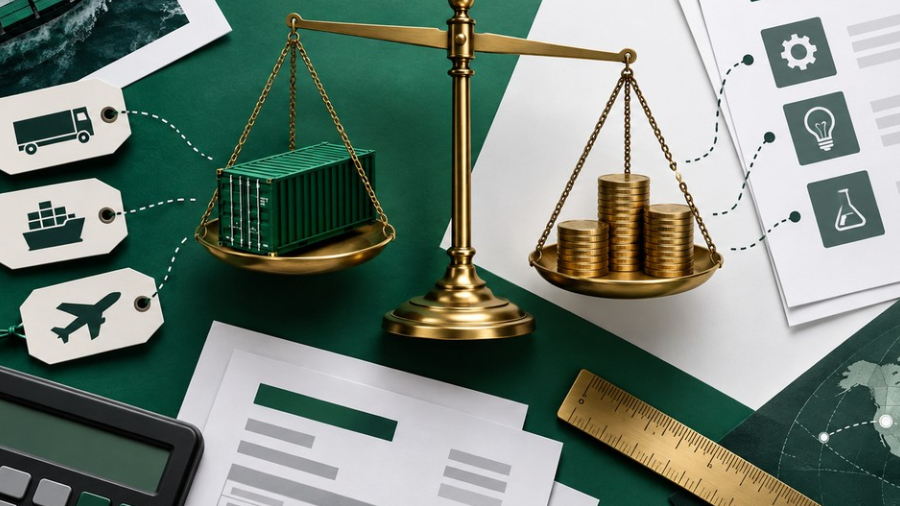
Will freight forwarders be replaced by AI? The short answer is no—not as a whole profession. Artificial intelligence will replace or accelerate many repetitive tasks, but freight forwarding is more than moving data between systems. It requires judgment, commercial negotiation, compliance oversight, exception recovery, and accountability across carriers, customs brokers, warehouses, truckers, suppliers, and customers.
The more realistic future is an AI-enabled forwarding industry. Routine work will become faster and more automated, while experienced people focus on decisions that involve risk, ambiguity, and relationships. Forwarders that combine good technology with strong operational knowledge are likely to deliver better service than either manual teams or software alone.
What AI Already Automates in Freight Forwarding
AI is most effective when a task has repeatable inputs, enough reliable data, and a clear result. Freight forwarding contains many processes with those characteristics, so automation is already changing how teams work.
Quotation and Rate Comparison
Digital tools can collect rate sheets, normalize charge descriptions, compare routing options, and prepare a first quotation. AI can help identify missing line items or unusual differences between offers. This reduces the time spent copying prices into spreadsheets, but a human still needs to confirm validity periods, service scope, exclusions, and destination conditions.
Document Extraction and Validation
AI can read commercial invoices, packing lists, bills of lading, and booking confirmations. It can extract shipper names, product descriptions, weights, dimensions, and reference numbers, then flag inconsistencies. This can reduce manual data entry and catch obvious errors earlier.
Document automation does not transfer legal responsibility to the software. A product description may look complete to a language model but still be inadequate for customs classification or another agency requirement. Important entries need qualified review.
Shipment Tracking and Exception Detection
Tracking systems can combine carrier events, vessel data, flight status, terminal updates, and trucking milestones. AI can identify a shipment that is likely to miss a connection or delivery appointment and alert the team before the customer asks.
The value is not the alert itself. The forwarder must decide what to do next: rebook, change a truck appointment, request more free time, prioritize customs documents, or explain realistic options to the customer.
Route and Capacity Planning
AI can compare routes based on price, transit time, historical reliability, inland distance, schedule frequency, and known constraints. It can help planners evaluate many alternatives quickly and can support container utilization or consolidation decisions.
Recommendations are only as good as the data and assumptions. A system may not know that a warehouse cannot receive a floor-loaded container, a supplier will miss the cutoff, or a customer values reliability more than the lowest rate unless those facts are provided.
Customer Updates
Automation can create routine status messages, summarize milestone changes, and answer simple questions such as whether cargo has departed. This gives operations teams more time for complex cases. Customers should still have access to a person when a delay affects inventory, production, or a sales commitment.
What Still Requires Human Judgment
Managing Complex Exceptions
International shipments rarely fail in identical ways. A customs hold, damaged container, missed sailing, incorrect document, trucker cancellation, or warehouse refusal can create a chain of decisions. Resolving the problem may require calls across time zones, trade-offs between cost and speed, and approval from several parties.
AI can organize information and suggest options, but an experienced operator understands which action is realistic and who has the authority to execute it. Human judgment is especially important when the available facts are incomplete or changing.
Compliance and Responsibility
Customs entries, sanctions screening, controlled goods, valuation, origin, and product-specific rules involve legal and financial consequences. Software can support research and validation, but it cannot simply assume the importer’s responsibility or a licensed professional’s obligations.
A forwarder must know when a question is outside routine practice and should be escalated to a customs broker, trade attorney, dangerous-goods specialist, insurer, or other qualified party. Knowing when not to automate is part of professional competence.
Carrier and Supplier Negotiation
Rates are only one part of a freight agreement. Space protection, equipment availability, free time, payment terms, claims handling, and support during disruption can determine the real service value. Negotiation depends on volume history, market context, credibility, and relationships.
AI can provide evidence for a negotiation, but it does not replace the trust built between people who must cooperate when operations go wrong.
Designing a Complete Logistics Solution
A customer may ask for the cheapest route while actually needing reliable delivery before a product launch. Another may request door-to-door service without realizing that the destination lacks a dock. A skilled forwarder asks questions, identifies hidden constraints, and converts a vague request into a workable transport plan.
This consultative work requires understanding the customer’s business, risk tolerance, inventory position, and operational limits. It is difficult to reduce to a standard prompt or workflow.
Accountability and Communication
When cargo is delayed or damaged, customers need a clear owner of the issue. They need facts, options, costs, and realistic next steps. A generated message cannot replace accountability. The forwarder’s role includes coordinating action and standing behind the service provided.
Which Tasks Are Most Exposed to Automation?
Roles built mainly around repetitive data entry, copying milestone updates, basic quote formatting, or standard document checks are the most exposed. The job may not disappear immediately, but the same workload can be handled by fewer people when automation is implemented well.
Tasks with high variation, weak data, regulatory consequences, commercial negotiation, or urgent exception handling are less likely to be fully automated. Even within one position, some duties may disappear while others become more important.
This means the useful question is not only “Will this job vanish?” It is also “Which parts of this job can software do, and which capabilities will create value after those parts are automated?”
New Skills and Roles Emerging
AI changes the skill mix inside freight companies. Operations knowledge remains important, but employees increasingly need to work with data and automation.
- Automation supervision: reviewing outputs, defining escalation rules, and checking whether workflows are performing as intended.
- Data quality management: keeping customer, product, rate, routing, and milestone data accurate enough for reliable decisions.
- Exception management: handling the unusual cases that automated systems cannot resolve.
- Solution design: translating customer goals into a complete routing, customs, and delivery plan.
- Technology integration: connecting transport-management, warehouse, carrier, customs, and customer systems.
- Risk and compliance oversight: ensuring that speed does not come at the cost of accuracy or legal obligations.
Entry-level staff may spend less time on manual typing and more time validating information, communicating with customers, and learning operational judgment. Companies will need deliberate training because experience cannot develop if junior employees never see how complex shipments are resolved.
Limits and Risks of AI in Freight Forwarding
Incomplete or Poor-Quality Data
Freight data is fragmented. Carriers, terminals, warehouses, brokers, and customers may use different formats and definitions. A missing cutoff time or incorrect carton dimension can make an otherwise sophisticated recommendation useless.
Confident but Incorrect Output
Generative AI can produce an answer that sounds convincing even when a fact is wrong or unsupported. That risk is unacceptable for tariff classifications, dangerous-goods instructions, legal clauses, or financial commitments unless a qualified person verifies the result.
Cybersecurity and Privacy
Shipping records may contain customer identities, product information, prices, supplier relationships, and commercial documents. Companies need access controls, secure integrations, retention rules, and clear policies about which information may be entered into an AI system.
Opaque Recommendations
A route recommendation is hard to trust if users cannot see why it was made. Operations teams need to understand the inputs, trade-offs, and confidence level, especially when a decision changes cost or delivery risk.
Liability and Responsibility
If an automated system selects the wrong service or uses incorrect document data, the customer still needs an accountable service provider. Contracts, review procedures, approval limits, and audit trails should make clear who is responsible for each decision.
Fragmented Technology
A powerful AI tool cannot fix a workflow if rates are stored in emails, customer data is inconsistent, and operational events are not connected. Many forwarding companies must improve basic process discipline and system integration before advanced automation can deliver reliable results.
Automate Repetition, Not Accountability
Use automation for data extraction, routine comparisons, standard updates, and alerts. Keep human approval for decisions involving unusual cargo, compliance, customer commitments, or material financial exposure.
Build Clean Operational Data
Standardize charge names, milestone definitions, product information, exception codes, and customer requirements. Accurate data improves both conventional reporting and AI performance.
Create Escalation Rules
Define when a task can proceed automatically and when it must be reviewed. Examples include missing documents, unusual value changes, dangerous-goods indicators, low-confidence classifications, and routes that do not meet a customer’s delivery window.
Train People to Challenge the System
Employees should know how to test an output, check its source, and recognize an unrealistic recommendation. AI literacy is not blind trust; it is the ability to use the tool while retaining professional skepticism.
Measure Business Outcomes
A new system should be judged by quote accuracy, response time, exception recovery, on-time performance, documentation quality, and customer satisfaction—not simply by how many tasks it automates.
Protect Human Access
Customers should be able to reach a knowledgeable person when a shipment becomes urgent or complex. Automation should make that person better informed and faster, not hide them behind generic responses.
Shippers can reasonably expect faster quotations, cleaner documents, more proactive tracking, and earlier warnings about risk. They should also expect transparency about what is automated and who reviews important decisions.
When evaluating a forwarder, ask practical questions:
- Who reviews customs and product information before shipment?
- How are route recommendations checked against the delivery requirement?
- What happens when carrier data conflicts or disappears?
- Who owns an exception after the system raises an alert?
- How is commercial information protected?
- Can the forwarder explain the charges and assumptions behind a quote?
A polished digital interface is useful, but it should not be confused with operational capability. The quality of the network, staff, controls, and escalation process still matters.
Practical Examples of Human and AI Collaboration
A Faster Quote with Better Review
AI extracts rates from several carrier files and prepares a comparison. The forwarder checks free time, routing, validity, and excluded destination charges, then recommends the option that best fits the customer’s delivery date. Automation speeds the analysis; the person protects the customer from an incomplete comparison.
Early Detection of a Missed Connection
A tracking system identifies that a delayed vessel is unlikely to meet its transshipment connection. The operator confirms the carrier’s alternatives, compares the delay and cost implications, and gives the customer a decision deadline. The model finds the risk; the forwarder manages the response.
Document Review Before Customs Arrival
Software detects that the invoice quantity and packing-list quantity do not match. A specialist contacts the supplier, confirms the correct figures, and updates the records before arrival. The automated check prevents a routine error, while human communication resolves it.
A Complex Delivery Site
A customer requests delivery to a location without a dock. The system may price standard trucking, but an operator recognizes the need for a liftgate, pallet handling, or a transload. The final plan depends on questions that were not present in the original data.
Will Smaller Forwarders Disappear?
AI does not automatically favor only the largest companies. Smaller forwarders can use modern tools to reduce administrative work and provide faster service without building large internal software teams. Their advantage may remain specialization, flexible decision-making, and close customer relationships.
However, firms that rely entirely on manual processes and cannot provide accurate, timely information will face pressure. The dividing line is likely to be between forwarders that use technology responsibly and those that do not—not simply between large and small businesses.
The Most Likely Future
Freight forwarding will become more automated, but the industry will still need people who understand cargo, trade rules, transport networks, and customers. Teams may be smaller in some administrative functions and stronger in data, systems, compliance, and exception management.
AI will continue to improve at pattern recognition, document handling, prediction, and communication. It will still operate inside a commercial and regulatory system where facts can be incomplete, physical events can disrupt plans, and someone must take responsibility.
Conclusion
So, will freight forwarders be replaced by AI? Repetitive forwarding tasks will be automated, and some roles will change significantly. But freight forwarders will not disappear as long as international shipping requires judgment, coordination, negotiation, compliance, and accountable problem-solving.
The strongest model is not human versus machine. It is an experienced forwarding team using AI to process information faster, detect risks earlier, and spend more time on decisions that matter. For shippers, the best partner will combine useful technology with clear ownership and genuine logistics expertise.
FAQ
Will AI eliminate freight-forwarding jobs?
AI is more likely to reduce repetitive tasks and reshape jobs than eliminate the entire profession. Data-entry and routine update work may decline, while exception management, compliance, solution design, and customer advisory skills become more valuable.
Can AI prepare freight quotes?
AI can collect and compare rates and draft a quote. A person should still verify service scope, validity, routing, surcharges, exclusions, and delivery requirements before the quote becomes a commercial commitment.
Can AI handle customs clearance by itself?
AI can extract documents and support research, but customs entries involve legal responsibility and product-specific judgment. Qualified importers, brokers, and specialists remain necessary for review and filing.
What is the biggest risk of using AI in logistics?
The biggest practical risk is acting on incorrect or incomplete information with too much confidence. Strong data controls, human review, access security, and clear escalation rules are essential.
How should a shipper evaluate an AI-enabled forwarder?
Look beyond the interface. Ask how data is verified, who approves important decisions, how exceptions are handled, how information is protected, and whether a knowledgeable person remains accountable for the shipment.
 English
 Deutsch
 Português
 العربية
 中文
中文


 25 Sep