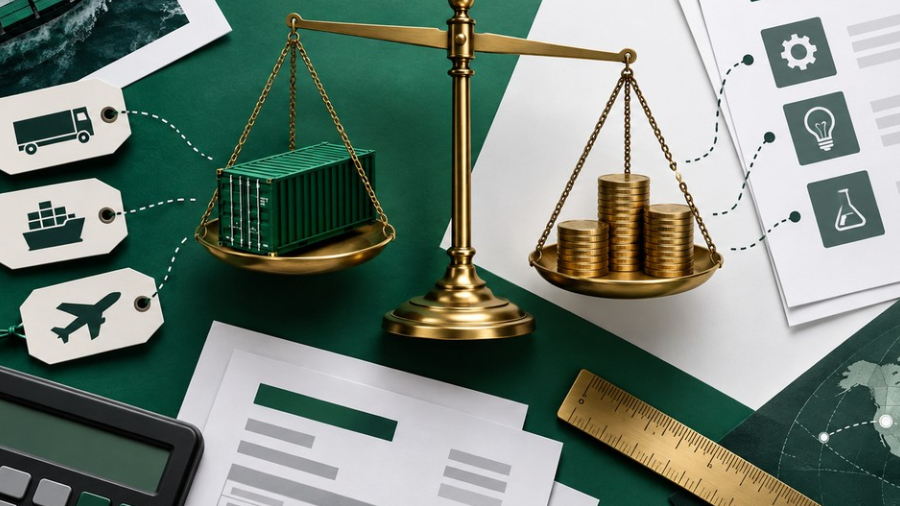
Under DDP (Delivered Duty Paid) Incoterms 2020, the seller is responsible for handling export procedures, international freight, import customs clearance, and payment of all duties and taxes until delivery at the buyer’s named location.
However, although the seller carries financial responsibility, the customs clearance process itself still requires coordination, documentation accuracy, regulatory compliance, and sometimes cooperation from the buyer.
Understanding the full DDP customs clearance process helps both buyers and sellers avoid delays, penalties, and unexpected operational costs.
This guide breaks down the entire workflow—from preparation to post-clearance—into structured, actionable steps.
1. Understanding the DDP Customs Clearance Framework
Before diving into steps, you must understand how DDP functions legally and operationally.
Under DDP:
- Seller acts as responsible party for import clearance
- Seller pays import duties and taxes
- Risk transfers only after delivery
- Buyer may still provide importer identification documents
The key distinction is this:
Seller bears financial liability, but customs authorities still require procedural compliance.
2. Step One: Pre-Shipment Preparation & Documentation Alignment
Preparation determines clearance success.
2.1 Confirm Named Place of Delivery
DDP must specify:
DDP [Full Address], Incoterms 2020
Ambiguity about delivery location can create inland freight disputes.
2.2 Core Documentation Checklist
The following documents are typically required:
- Commercial Invoice
- Packing List
- Bill of Lading / Air Waybill
- Certificate of Origin
- HS Classification
- Import License (if applicable)
- Insurance certificate (if included)
Errors in invoice value or product description are the most common delay triggers.
2.3 Align Declared Value with Payment Terms
Customs value usually includes:
Product value
Freight
Insurance
Under-declaration creates penalty risk.
Over-declaration increases duty cost unnecessarily.
3. Step Two: Accurate HS Code Classification
HS code accuracy directly affects:
- Duty rate
- VAT rate
- Import restrictions
- Inspection likelihood
Misclassification can lead to:
- Reassessment penalties
- Delays
- Post-clearance audits
Best practice:
Obtain written HS confirmation from customs broker before shipment.
4. Step Three: Calculate Duties, VAT & Associated Charges
Under DDP, seller must calculate:
Import duty
VAT / GST
Anti-dumping duties
Excise tax (if applicable)
Customs brokerage fees
Port handling charges
Example:
Shipment Value: $60,000
Duty Rate: 7% → $4,200
VAT 12% (on CIF + duty) → approx. $7,700
Brokerage → $1,200
Total import exposure ≈ $13,100
Under DDP:
Seller must absorb this cost.
Incorrect estimation reduces margin.
5. Step Four: Appoint Customs Broker & Submit Declaration
In most countries, foreign sellers cannot directly file customs entry.
They must:
- Appoint licensed customs broker
- Possibly establish fiscal representation
- Provide power of attorney
Declaration submission includes:
- Electronic filing
- Duty payment
- Risk screening review
Customs may:
Release shipment
Request additional documentation
Conduct inspection
Preparation reduces inspection probability.
6. Step Five: Customs Review & Risk Management
Customs risk assessment systems analyze:
- HS code consistency
- Valuation accuracy
- Importer history
- Country of origin
If flagged:
Shipment may face physical inspection.
This can cause:
- Storage fees
- Demurrage charges
- Delivery delays
Under DDP, seller bears these financial consequences.
7. Step Six: Duty Payment & Clearance Release
After declaration approval:
Seller pays:
- Import duty
- VAT
- Clearance fees
Payment confirmation triggers release notice.
Clearance certificate allows goods to move to final delivery stage.
8. Step Seven: Inland Delivery to Named Destination
Post-clearance, goods move to final address.
Seller arranges:
- Trucking
- Handling
- Delivery scheduling
Risk transfers only once goods are ready for unloading.
9. Country-Specific Considerations
United States
Importer of Record must be legally recognized entity.
Foreign sellers may need U.S. customs bond.
European Union
VAT registration may be required.
Fiscal representative often needed.
Middle East
Documentation legalization may be required.
Regulatory structure differs significantly by jurisdiction.
DDP requires local compliance knowledge.
10. Common DDP Clearance Mistakes
Incorrect HS classification
Underestimated duty cost
Failure to confirm importer eligibility
Incomplete invoice description
Ignoring VAT registration requirements
Most delays originate from documentation inconsistencies.
11. Risk Control Framework
To optimize DDP customs clearance:
Pre-validate HS codes
Confirm duty rates with broker
Clarify importer of record structure
Verify tax registration compliance
Specify Incoterms version clearly
DDP requires proactive risk management.
12. Advanced Cost Optimization Strategy
Experienced exporters:
Maintain internal duty databases
Partner with destination brokers
Track regulatory updates
Adjust pricing buffers strategically
DDP is operationally intensive but commercially attractive when executed properly.
13. Example Timeline
Day 1–5: Documentation preparation
Day 6: Shipment departure
Day 15: Arrival at port
Day 16–18: Customs declaration & review
Day 19: Duty payment
Day 20: Clearance release
Day 21–23: Inland delivery
Delays typically occur between arrival and declaration.
14. Strategic Perspective for Buyers
Even though seller pays under DDP:
Buyer should:
Review invoice accuracy
Confirm tax ID requirements
Track shipment progress
Ensure unloading capability
DDP simplifies but does not eliminate involvement.
For related planning, read Customs Declaration Essentials: A Complete Guide for Smooth Clearance and Who Pays Duty Under DDP? Complete Legal, Cost & Risk Guide for.
15. Final Strategic Summary
The DDP customs clearance process includes:
Preparation
Classification
Duty calculation
Broker appointment
Declaration submission
Payment
Release
Final delivery
Under DDP, the seller bears financial responsibility for import duties and clearance.
However, procedural cooperation and documentation alignment remain essential.
DDP provides predictable landed cost but requires strong compliance capability.
Mastering the DDP clearance workflow reduces risk, protects margin, and ensures seamless international delivery.
 English
 Deutsch
 Português
 العربية
 中文
中文


 25 Sep